
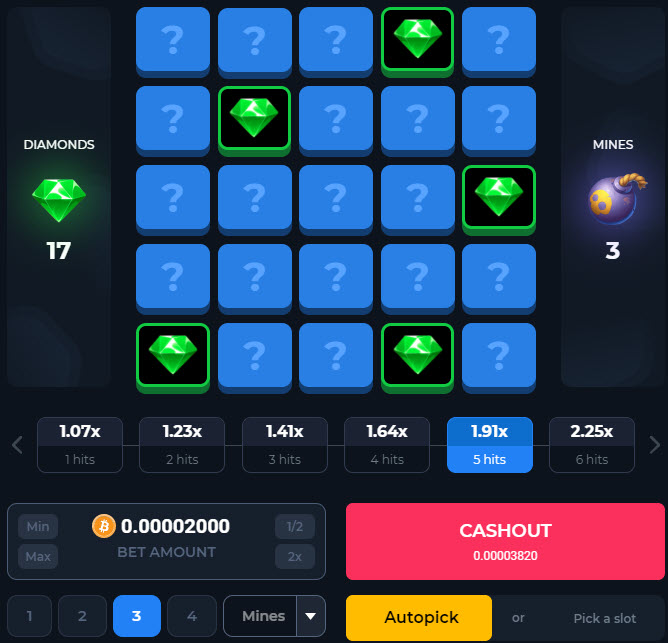
Hello UK players https://minesgames.eu/. Ever asked yourself what’s really going on when you click those squares in Mines Game? We’re pulling back the curtain. This isn’t just about luck. It’s a realm of probability, and we’re going to break down the core maths. You can turn guesswork into a clear strategy for your next session.
Smart Strategies Based on Maths
Let probability guide you. Begin with lower mine counts to understand the odds. Decide on a cash-out target before you play. Never chase losses by thinking the ‘next one must be safe’. Remember, the house edge is always there. Controlling your bankroll well is just as crucial as understanding the grid. View each session as a series of independent events, not a connected story.

The Core Probability: Your Opening Click
Start with the most secure bet. On a 5×5 grid with 3 mines, 22 squares are secure. Your first click has a 22/25 chance of being clear. That’s an 88% chance. This strong initial security lets the game start without issue. It’s a natural advantage, a firm foundation. Many probability-based games employ this beneficial start to draw players in.
Understanding the Game Grid and Configuration
You must grasp the layout before calculating odds. A usual 5×5 grid has 25 total squares. Before you tap, the game randomly places a fixed number of mines. You’ll often see 3, 5, or more mines. This starting setup is everything. It determines the entire probability landscape for your game. Every decision you make originates from this hidden layout.
Playing Mines Wisely in the UK
Mines Game is entertainment. Comprehending the maths deepens your appreciation and enhances your decisions. Always gamble within your means. Employ tools like deposit limits, which are offered at UK-licensed platforms. Let the numbers steer your fun. The best strategy is the one that keeps the game fun. Participate for the thrill of the puzzle, not just the potential payout.
How Odds Change Through Every Reveal
Chance never stands still. Following a safe first click, the grid alters. Now, 21 protected spots and 3 mines are left out of 24 squares. Your next click has an 87.5% chance of safety. This minor drop continues with every secure reveal. Getting a feel for this flow is how you manage risk. The odds adjust instantly, creating a new mathematical puzzle with every move.
Assessing Risk vs. Reward
The game’s excellence is in its balance. More mines signify higher potential multipliers, but your odds of survival fall. Choosing 3 mines instead of 5 totally changes the probability landscape. You have to weigh the enticing reward against the statistical chance of getting it. This calculation sits at the heart of every decision. The growing multiplier is designed to tempt you as the safety rate drops.
What Exactly Is the Mines Game?
Mines is a game of fortune and nerve. You see a grid, usually 5×5, containing several explosive mines. Your goal is to expose safe squares and steer clear of the mines. Each safe click shows a cash prize multiplier. The real tension comes from determining when to cash out before your luck fades. It’s a genuine test of risk, admired for its simple, tense gameplay.
The Withdrawal Problem: A Mathematical View
At what point do you secure your profits? It’s a classic probability problem. Each new click offers a bigger prize but risks losing everything. The optimal point varies by person. But the mathematics indicates that pursuing extremely high multipliers typically reduces your expected value. Smart players know their limit. Defining a win objective before starting is a disciplined, numbers-backed routine.
Anticipated Return: The Overall Perspective
Expected Value (EV) shows you average returns over time. It combines every potential result, its worth, and its likelihood. One individual game is unpredictable, yet EV provides a tactical roadmap. As an illustration, a stable tactic employing low mine numbers and early payouts may produce a more dependable positive EV. This concept is the foundation of clever, math-based gaming.
Widespread Fallacies and False Beliefs Debunked
Many players subscribe to «due» hits or patterns. This is the gambler’s fallacy. Each click is an independent event. Past reveals don’t influence future ones. The grid is fixed at the start. Believing otherwise leads to costly mistakes. Have faith in the cold, hard maths, not superstition. The random number generator has no memory and no sense of fairness.